HISTORIC AMERICAN AIRLINES AIRCRAFT ------ Past and Present
Ford Tri-Motor
The Ford Tri-Motor represents an early step toward the "modern
airliner." Its unusual corrugated metal skin gave it strength and three
engines gave the aircraft a degree of safety not found in earlier
passenger aircraft. The Ford Tri-Motor was used by American Airways on
its southern transcontinental route.
Curtiss Condor
The Curtiss Condor was an U. S. Army Air Corps bomber turned
airliner. Though slow, the Condor was the most luxurious airliner of its
time. American used both day and sleeper versions of the Condor. The
sleeper configuration even included a "honeymoon suite."
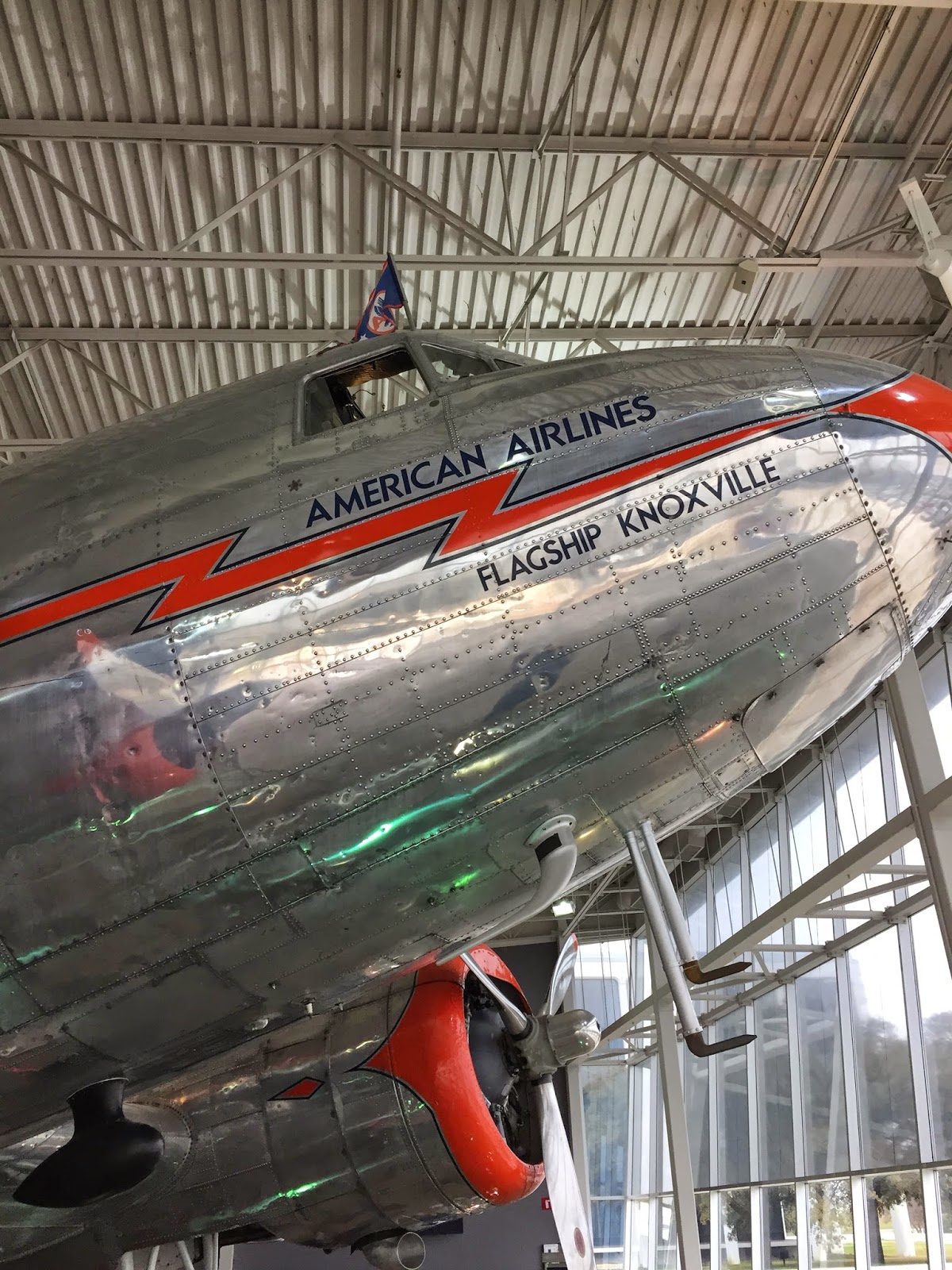
Douglas DC-3
The Douglas DC-3 revolutionized the air transportation industry
when American Airlines introduced it in 1936. Built at the request of
American's president C.R. Smith, the DC-3 was the first airliner able to
operate at a profit carrying only passengers. The DC-3 was the primary
aircraft of all major airlines in the United States during the late
1930s and early 1940s.
Covair 240
In the years immediately following World War II, American Airlines
searched for an aircraft to replace the Douglas DC-3. The twin-engine,
forty place CV-240 (hence the "240" - 2 engines, 40 passengers), fit the
bill. Designed to American's specifications, the CV-240 included such
features as integral air stairs, which reduced the amount of ground
equipment needed to service the aircraft.
Douglas DC-6
The Douglas DC-6 was American's answer to the Lockheed
Constellations of TWA. The DC-6 proved to be an outstanding aircraft and
was the backbone of the American fleet in the late 1940s and early
1950s. The DC-6 was the last piston powered aircraft American used; both
passenger and cargo versions of the DC-6 served into the early 1960s.
Boeing 707
In January 1959, American Airlines entered the jet age by
introducing non-stop, jet-powered transcontinental service with the
Boeing 707. The sleek four-engine aircraft represented as dramatic an
advance in aircraft technology as the Douglas DC-3 had more than
twenty-five years earlier. The 707 was a huge success for American and
cut coast-to-coast travel time from eight hours to just over five.
Lockheed L-188 Electra II
While the Boeing 707 brought the jet age to large cities, the
turbo-prop L-188 Electra II brought jet power to smaller stations.
Introduced just months after the larger Boeing, the Electra II was
utilized on American's short and medium-haul routes including flights
from Love Field. The basic Electra II design was eventually adapted by
the U.S. Navy as the P-3 and EP-3 patrol aircraft.
Boeing 727
American Airlines first introduced the Boeing 727 in April 1964. It
was the first three-engine aircraft American used since the Ford
Tri-Motor of the 1930s. Because the 727 is capable of operating from
smaller airports such as LaGuardia and Washington-Reagan, American
Airlines has operated at least one model of the 727 for nearly forty
years.
Boeing 747
The massive Boeing 747 was the world's first jumbo jet. American
Airlines first introduced the 747 in March 1970. While American used the
747 to carry passengers for only a few years, it served as an all-cargo
aircraft for longer. This oversized aircraft was capable of carrying
oversized cargo such as one of San Francisco's famous streetcars.
Douglas DC-10
In March 1966, American Airlines issued a request to Douglas for a
"Jumbo Twin" airliner. After studying American's request, the McDonnell
Douglas company responded with a suggestion that American's large twin
be enlarged further to a much more capable three-engine design. American
agreed and the DC-10 was born. American Airlines was the first U.S.
airline (beating United) to operate the DC-10. This wide-body airliner
entered American's fleet in 1971 and was used on American's long haul
routes. Well-liked by its crews, the last American Airlines' DC-10 was
retired on November 22, 2000.
McDonnell Douglas MD-80
The MD-80 is the backbone of the American Airlines fleet. American
flies more than 270 MD-80 series aircraft and is the world's largest
operator of the type. The first American MD-80 was delivered on May 12,
1983. The introduction of the MD-80 in the mid-1980s allowed American to
rapidly expand its route system and fleet. In 1984, American operated a
fleet of 244 aircraft by 1997 that number had grown to 649 aircraft,
250 of which were MD-80s.
Boeing 757
American Airlines added the Boeing 757 to its fleet in 1989. The
757 shares the same fuselage width as the earlier Boeing 707 and in many
ways the 757 is really a much more efficient, twin-engine 707. Seating
176 passengers in a two-class configuration, American's 757s are used
mostly on medium-haul or high-density routes. Behind the MD-80, the 757
is the second most numerous aircraft in American's fleet (American
operates 102 Boeing 757s).
Boeing 777
Also known as the "21 Century Jet," the Boeing 777 is the queen of
the American Airlines fleet. Capable of operating non-stop from DFW to
London or Tokyo, the 777 has replaced both the DC-10 and MD-11 as
American's premier long-haul aircraft. Flown in a three-class
configuration, American Airlines' 777 offer passengers such amenities as
individual video screens and full-flat reclining seats in first class.
Boeing 737
The 737 first took to the skies in 1965. Boeing has continued to
improve the basic 737 design and today the 737 is the most commonly used
airliner in the world. American Airlines operates one of the largest
and newest versions of the 737, the -800 model. American's 737-800
aircraft are equipped with today's most advanced avionics including a
Heads-Up-Display (HUD) for both pilot and co-pilot, making these
aircraft some of the safest in the world.
Canadair CRJ-700
Our CRJ-700 jet offers a smooth, quiet ride and features rich
leather seating with adjustable headrests in a two-by-two seating
arrangement. Designed to American Eagle's exact specifications, these
jets offer air travel on longer flights and more heavily traveled routes
between key cities in the American Eagle network. In 2010 Eagle
configured our CRJ-700s with a First Class cabin and service. American
Eagle offers customers the same level of outstanding service they
experience in an American Airlines First Class cabin when flying this
state-of-the art aircraft.
Embraer 145
This sleek twin-engine regional airliner has opened new
possibilities for American Eagle. The performance of the pure
jet-powered RJ-145 is unmatched by any turbo-prop, allowing it to fly
higher, faster, farther and quieter than its propeller driven
competition. The RJ-145 range has allowed Eagle to introduce much longer
point-to-point routes than were practical with either the Saab 340 or
the ATR-72 for example, DFW to Milwaukee.
Boeing 767
American introduced the twin-aisle Boeing 767 family of jets into
its fleet in 1982 with the B767-200. Then came the Boeing 767-200
Extended Range 9ER) in 1985 and the Boeing 767-300ER in 1988. American
today flies the B767-200 on its transcontinental markets and the
B767-300ER to Europe and Latin America.
McDonnell Douglas MD-11
The McDonnell Douglas MD-11, with a range of more than 6,000
miles, entered American's fleet in 1991 as its long-haul international
aircraft to supplement and replace the McDonnell Douglas DC-10. A good
passenger/cargo airplane, the MD-11 was retired from the fleet in 2001.
Fokker 100
This small 87-seat aircraft was purchased by American for use in
its short-haul domestic markets and can be considered the precursor to
the Regional Jet. It was built by Dutch aircraft manufacturer Fokker.
It was in the AA fleet from 1992 through 2004.


.JPG)
.JPG)



.JPG)


.JPG)
.JPG)
.JPG)
.JPG)


.JPG)
.JPG)
.JPG)
.JPG)
.JPG)
.JPG)


.JPG)
